
The evolving role of human rights
The new Guidelines on Human Rights 2026–29 underscore the fact that universal respect for human rights remains a central objective of Swiss foreign policy. Clear principles, specific areas of action and a broad range of instruments are intended to further strengthen effectiveness and coherence in a time of global upheaval. Interview with Ambassador Tim Enderlin, the head of the Peace and Human Rights Division.
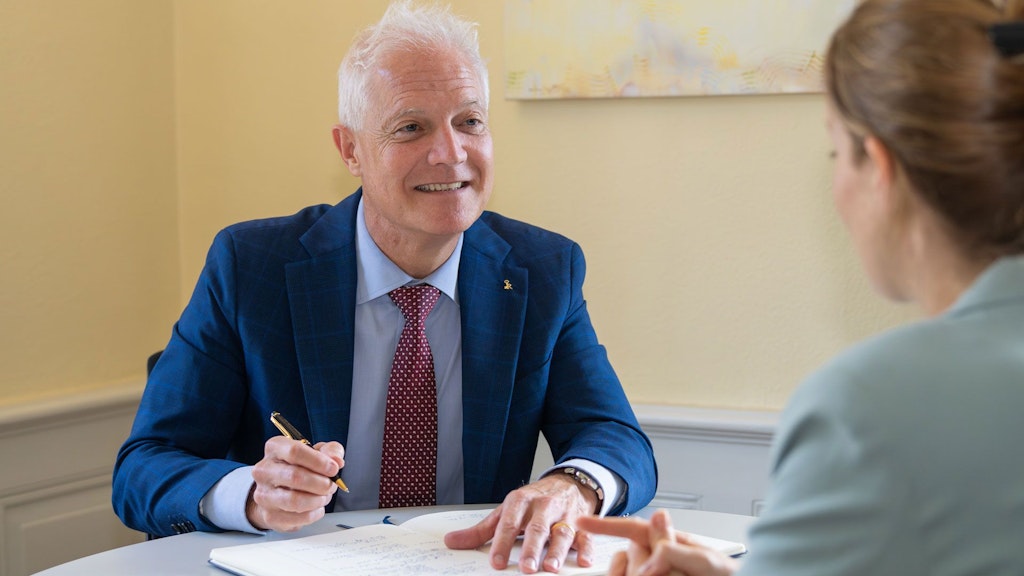
Ambassador Enderlin, the new guidelines were published today. They follow on from the ones for the period 2021–24. What has changed?
Human rights have never been static. They are enshrined in international law, but implementing them is always a challenge and depends on the specific context.
We are currently experiencing profound geopolitical shifts, social polarisation and rapid technological advancement. At the same time, fundamental freedoms are under growing pressure and the principle of universality – in other words that human rights should apply to all people everywhere – is increasingly being called into question. Democratic values such as the rule of law and citizen participation are also being eroded in many places.
Swiss human rights diplomacy takes account of these changes. We are now interweaving the different levels of our work even more closely. Multilateral diplomacy, bilateral dialogue and project-based collaboration are more systematically interlinked and strategically coordinated.
In specific terms, this means that positions that we advocate in the Human Rights Council are incorporated into bilateral talks. Observations from the external network inform our multilateral contributions. And political demands are underpinned by concrete projects that allow them to become reality.
For us, human rights diplomacy is therefore not just a positioning based on values and principles, but a political task on several levels – that aims to make an impact. We therefore specifically adapt our approaches and instruments in order to remain effective, credible and relevant – and we do so in a way that is pragmatic and appropriate to the situation.
In the guidelines, you refer to the Human Rights Index from the V-Dem international research project. What conclusions do you draw from it?
The Human Rights Index measures the extent to which human rights are respected, protected and implemented in a country or region. It takes into account indicators such as physical integrity, private freedoms and political rights.
The data shows a global human rights trend headed slightly downward. And meanwhile, many international human rights mechanisms are chronically underfunded. For us, this means we need to deploy our resources in an even more targeted way and focus on securing and consolidating what we've already achieved.
“Consolidating what has already been achieved” – what does that actually mean?
The 2026–29 guidelines set priorities. Through binding principles, concrete areas of action and a broad range of instruments, they aim to strengthen Switzerland's effectiveness and coherence in promoting human rights abroad. The focus is on implementing existing obligations consistently, strengthening the normative foundation, and protecting particularly vulnerable groups in a targeted manner.
In this, we are focussing even more strongly on the interplay between human rights, democracy and the rule of law. These three dimensions are distinct but closely linked. Together, they contribute to stable, inclusive societies. While human rights underpin democratic systems, it is democratic institutions that guarantee the rule of law.
In addition to this interplay, the guidelines also emphasise the link to peace diplomacy. Can you elaborate on this?
Internationally, Switzerland is a recognised player both in human rights and in peacebuilding. Discretion, dependability and impartiality underpin our work. This is also based on the conviction that peaceful coexistence is only possible in the long term if human rights and fundamental freedoms are upheld. Human rights not only contribute to stability and prosperity, their respect is also linked to effective conflict prevention, as shown by numerous crises and conflicts.
These tasks – promoting respect for human rights, peace and democracy worldwide – are enshrined in the Federal Constitution (Art. 54 para. 2 Cst.) and are grounded in law (Federal Act on Measures pertaining to Civil Peace Support and the Promotion of Human Rights). They form the basis of the work of the Peace and Human Rights Division.
In the foreword to the guidelines, Federal Councillor Ignazio Cassis writes: “Protecting individuals and their fundamental freedoms remains the absolute priority.” What does that mean to you?
The statement sums up what human rights are all about – in their most original form, they protect the individual from the arbitrary exercise of state power. The preamble to the Federal Constitution also says: “[…] that the strength of a people is measured by the well-being of its weakest members […].” The guidelines with all their principles, thematic priorities and areas of action are ultimately based on this conviction. Our long-standing efforts advocating the abolition of the death penalty are a good example of this. The death penalty violates a right to which every human being is entitled: life. It is therefore fundamentally incompatible with human rights. Unfortunately, this position is not shared by all countries.
Death penalty
Switzerland is categorically opposed to the death penalty in all circumstances and advocates for a world without capital punishment. In 2024, it launched the 2024–27 action plan to abolish the death penalty worldwide. Targeted measures and awareness-raising projects supported by Switzerland have led to the complete or partial abolition of capital punishment in seven countries. In addition, the number of countries supporting the UN moratorium has risen from 123 to 130. The death penalty will remain a thematic priority of Swiss human rights diplomacy for the period 2026–29.
At first glance, the thematic priorities look the same. Has anything changed?
We combine consistency with targeted adaptation to current developments: Swiss human rights diplomacy remains true to its thematic priorities, in which it has great expertise and credibility. It focuses on respect for the right to freedom of expression, the universal abolition of the death penalty, absolute compliance with the prohibition of torture and ill-treatment, the protection of national, ethnic, religious and linguistic minorities and vulnerable groups, and respect for human rights in business. We are continuing to refine these in a targeted way, focusing more strongly on the real-world impact of our work. The rights of women and girls, which were previously dealt with in a separate strategy, have been integrated for the first time.
What is new, however, is the cross-cutting theme of digitalisation. The new guidelines pay particular attention to digitalisation and the associated technological developments. These developments open up new ways of strengthening and protecting human rights, for example through improved access to information and more opportunities for civic education and political participation. At the same time, digitalisation entails risks, particularly in the areas of surveillance, disinformation, discrimination and privacy.
Finally, what motivates you personally to champion human rights?
Time and again in my work, I come across people who show courage, hope and a sense of responsibility despite difficult circumstances. I find that really impressive – and it reminds me why this effort is worthwhile.
I also find working with our colleagues in representations abroad particularly motivating. There are so many competent and experienced FDFA employees out there who use their tact and creativity to find ways of engaging with partners from a wide range of value systems to build trust. This is often where the small yet decisive steps forward are made.
Switzerland has the privilege of being listened to and enjoying trust. Especially in geopolitically challenging times, this shouldn't be taken for granted. Perhaps it is precisely the complexity of today's world that makes our task even important. It motivates us to fulfil this role responsibly, even in demanding circumstances, and to stand firm in our principles.
Working together to harness this trust while respecting differences in order to have a constructive impact – that spurs me on. Each day afresh.
Documents
Guidelines on human rights 2026–29
The new Guidelines on Human Rights 2026–29: clear principles, specific areas of action and a broad range of instruments.
Contact
General Secretariat GS-FDFA
Federal Palace West
3003 Bern