
OSCE conference in Geneva: Anticipating technologies – for a safe and humane future
The OSCE conference ‘Anticipating technologies – for a safe and humane future’ on 7 and 8 May 2026 will focus on dialogue, trust and joint approaches to achieving greater peace and security in an increasingly complex world. This also dovetails with Switzerland's work on the UN Security Council.
On 7 and 8 May 2026, as part of its OSCE chairpersonship, Switzerland will be hosting an international conference in Geneva on the anticipation of new technologies and their significance for security and peace in Europe. Senior figures from OSCE participating states and partner countries, science, the private sector and international organisations will discuss how opportunities can be seized, risks minimised and, through enhanced dialogue, trust and security strengthened in a rapidly changing world.
At the heart of this lies a fundamental transformation: technological developments – from AI and quantum technologies to neurotechnologies – are changing not only the economic and societal landscape, but increasingly also the foundations of international security. This drive is opening up new avenues for resilience-building and crisis management, yet at the same time harbours considerable risks – such as geopolitical shifts, growing inequalities and the targeted use of technologies for destabilisation.
Against this backdrop, Switzerland is pursuing a forward-looking approach that aims to make anticipation a guiding principle of security policy: international actors are called upon to gain an understanding of technological developments at an early stage, analyse their implications and shape them collectively, rather than reacting to crises at a later stage. The goal is to proactively turn technological change into a driver of security – rather than a source of new instability.
Closely linked to this is a people-centred approach that brings together technology, diplomacy and governance. Trust and dialogue form the core of this. Precisely because new technologies are also changing the way states and non-state actors interact, negotiate and exchange information, the question of how security models can be adapted to this new reality is taking on increasing relevance.
Continuity with Switzerland's seat on the UN Security Council
The OSCE conference in Geneva builds on Switzerland's work on the UN Security Council. In May 2023, Federal Councillor Ignazio Cassis chaired an open debate there on sustainable peace through confidence-building, with over 70 UN member states as well as key actors from International Geneva involved. Central to this was the recognition that trust between states increasingly depends on jointly grasping and contextualising scientific and technological developments.
Another milestone followed in October 2024: under the Swiss presidency, the UN Security Council officially recognised for the first time that scientific developments have a direct impact on peace and international security. At the same time, the council agreed to incorporate scientific findings more systematically into its work. This marked an important step towards a more science-based security policy.
Switzerland is now continuing this approach during its term as chair of the OSCE. It has declared the anticipation of new technological developments a strategic priority – with the aim of strengthening dialogue and trust as the foundation of cooperative security within the OSCE.
Technology as a driver of – and a challenge to – security
The conference highlights key areas where technological developments are already shaping security architecture today:
Anticipating technologies: the example of the quantum computer
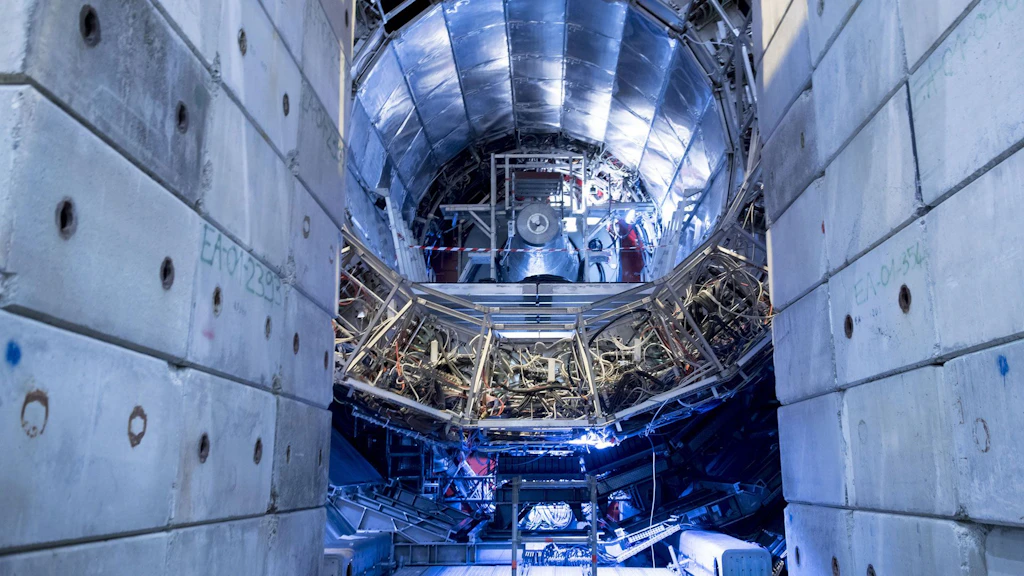
Quantum computers and other disruptive innovations have the potential to fundamentally shift existing power balances. At the same time, initiatives such as the Open Quantum Institute and close cooperation with institutions such as CERN and the Geneva Science and Diplomacy Anticipator (GESDA) demonstrate how scientific cooperation can help integrate these technologies into multilateral processes at an early stage. Such approaches make it possible to pinpoint and mitigate risks whilst ensuring that technological advances remain widely accessible.
Water and energy security as a shared security challenge
Water and energy are increasingly becoming central factors in international stability. In a world of growing scarcity, rising demand and increasing conflicts over usage, they are becoming key security issues. At the same time, concrete examples from the OSCE area – such as in Central Asia – show that cross-border cooperation along river systems can build trust. Digital technologies, ranging from satellite monitoring to cross-sectoral and cross-regional shared data platforms, enable more transparent management of shared resources. Water thus becomes not only a potential source of conflict, but also a source of peace and cooperation.
Artificial intelligence and conflict prevention
Artificial intelligence opens up new opportunities for identifying conflicts at an early stage and taking preventive action. By analysing large volumes of data, risks such as resource scarcity and societal tensions can be identified more quickly. At the same time, the risk of abuses such as disinformation and the targeted manipulation of public opinion is growing. This makes it all the more important for the use of AI to be transparent, respectful of human rights and grounded in clear international rules. Technology can support political processes, but it does not replace human responsibility for peace and security.
From analysis to application: learning from real-world use
The anticipation of technological innovations is already helping in real-world contexts – for instance, to spot early-stage crises, monitor environmental changes and coordinate humanitarian aid. These examples show that a shift from reactive crisis management to proactive risk management is possible. However, it remains crucial for technological instruments to be embedded in broad, trust-based cooperation and legitimised through multilateral structures.
Geneva as a hub for addressing future challenges
International Geneva, as a hub where science, diplomacy and multilateral cooperation converge, is the ideal venue for the OSCE conference. Institutions such as CERN and initiatives such as GESDA illustrate the link between scientific innovation and international policymaking. Geneva is a place where key issues of global governance are negotiated – particularly where technological developments require new political responses. In a time of growing geopolitical tensions, this role is becoming even more significant: scientific cooperation and links to diplomacy can help maintain dialogue and build trust, even where political differences exist.
Trust as the foundation of cooperative security
Switzerland's approach aims to strengthen trust as a core resource of international security. In an increasingly complex and technology-driven world, the ability to jointly anticipate, comprehend and shape developments is becoming a decisive factor for stability.
The conference in Geneva thus exemplifies a long-term orientation of Swiss foreign policy: it builds on the combination of science, diplomacy and multilateral cooperation to ensure that technological change does not lead to new rifts, but instead serves as a foundation for dialogue, cooperation and sustainable security.
Chair’s Summary – Conference: Anticipating technologies – for a safe and humane future
The OSCE Chairmanship’s summary of the conference in Geneva sets out the key findings of the event held on 7 and 8 May 2026.
Contact
General Secretariat GS-FDFA
Federal Palace West
3003 Bern